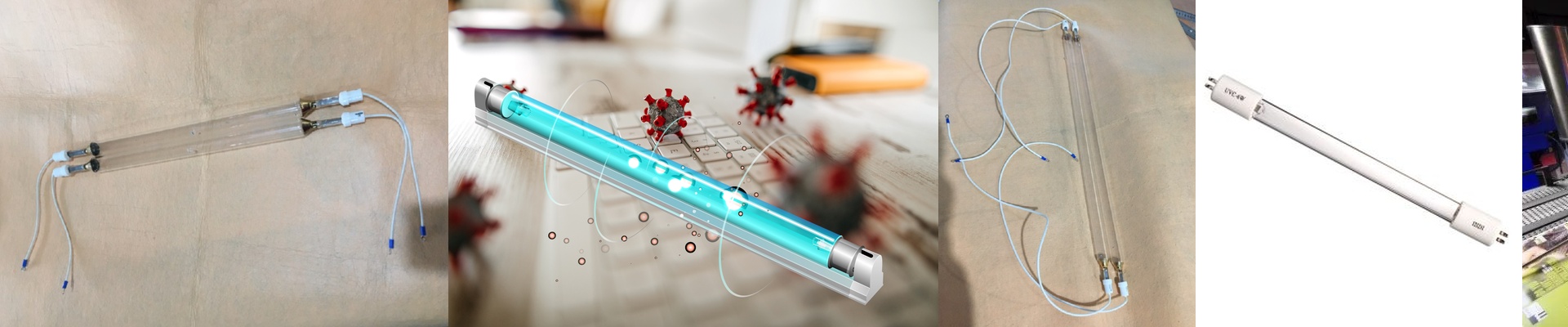
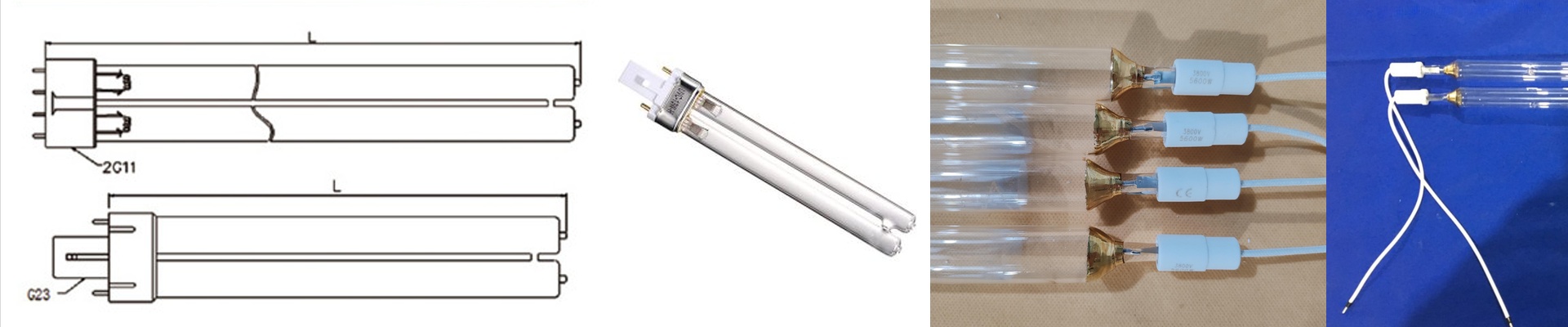
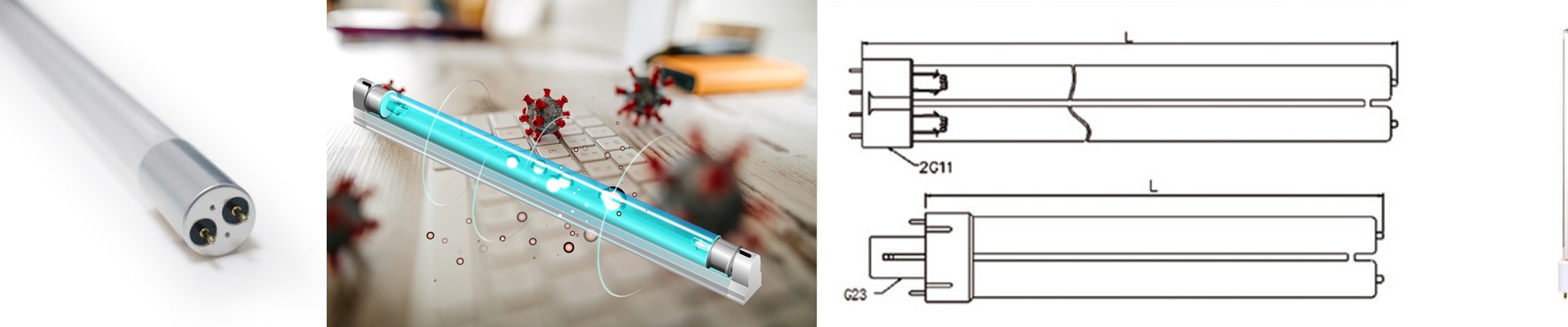
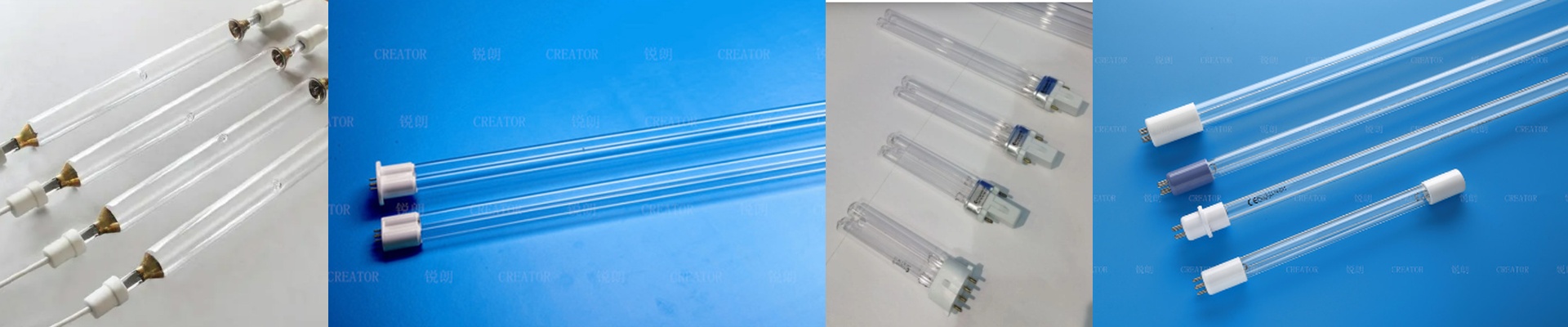
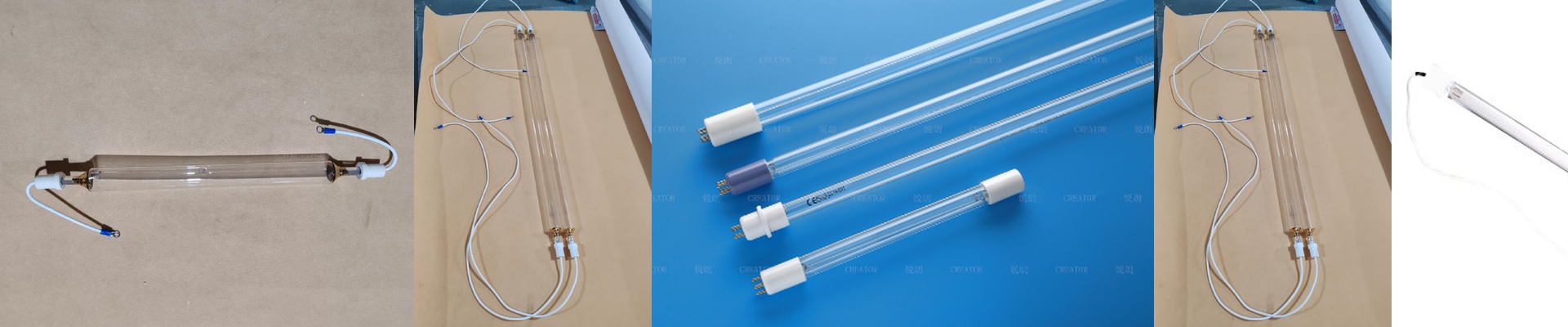
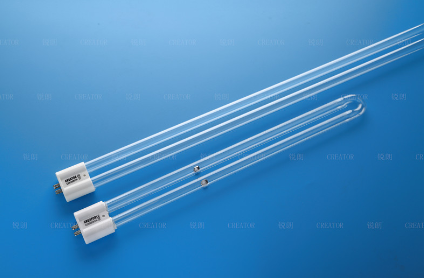
On the disinfection line, the UVC lamp hums along, the quartz sleeve is seated, and the control panel looks steady. Then the log sheet shows the real story: irradiance drifting down, kill rates slipping, and rework climbing for no obvious reason. The lamp itself is rarely the failure. It’s the film of scaling, organics, and condensation that scatters and soaks up UVC before it ever hits the target. If you can’t measure actual lamp output at the process plane, you can’t back up your disinfection claims. That’s why intensity monitoring is the only honest way to confirm performance, and why keeping the quartz sleeve clean is step one—otherwise your readings are just wishful thinking.
What actually sets UVC output at the sleeve
UVC germicidal lamps rely on low-pressure mercury vapor emission, with a strong line at 253.7 nm. That’s the wavelength DNA and RNA absorb, and it’s where the dose-response relationship stays predictable. Output at the sleeve isn’t a vague glow; it’s quantifiable irradiance, typically expressed in mW/cm². Dose is irradiance integrated over exposure time, reported in mJ/cm². For disinfection, the required dose depends on the organism: many water and surface applications target 30–40 mJ/cm² at the target plane, while tougher organisms need significantly more. The quartz sleeve is the bridge between the high-output arc and the outside environment. It has to transmit the 253.7 nm line with minimal absorption, resist solarization under sustained UV exposure, and handle thermal cycling without cracking. High-purity fused quartz gives you high UVC transmissivity, and the sleeve geometry sets the lamp-to-target distance and stabilizes the optical boundary. When the sleeve is clean, the radiometer reading reflects the lamp and fixture. When it’s fouled, the reading turns into a system artifact, and your disinfection claim loses its physics. Intensity monitoring is not optional. UVC output drops as the lamp ages—electrode wear, mercury depletion and migration, and gradual loss of coating integrity all play a part. The decline isn’t linear, and it isn’t uniform along the sleeve. A fixed timer or lamp-hours counter won’t tell you what’s arriving at the target. A calibrated radiometer, placed at the process plane and tracked over time, will.
Why a clean quartz sleeve makes monitoring honest
A thin film on the sleeve can cut effective UVC delivery more than most operators expect. Mineral scaling, biofilms, oils, and condensation all attenuate the beam. The result is measured irradiance that’s lower than the lamp’s true output, and delivered dose that falls short of the calculated dose. If you’re running to a validated microbial reduction target, that shortfall is risk with a number attached. We design sleeves to be cleanable and to keep measurement honest. Wall thickness is controlled—strong enough, but not so thick that absorption climbs. The surface is polished to cut down scattering. Geometry is held to tight tolerances so lamp-to-sleeve and sleeve-to-target distances stay repeatable, which matters when you’re correlating radiometer readings with microbiology. The sleeve also manages temperature. UVC output is temperature-dependent; the sleeve helps keep the lamp in its sweet spot while shielding the arc from drafts and splash. When the sleeve is clean, the radiometer sees the lamp through a stable window. Calibration factors stay valid. Baselines stay consistent. Alarm thresholds track real changes in disinfection capacity. Then you can set a cleaning schedule based on measured intensity drift instead of guesswork, and defend it with data auditors actually recognize.
What you get when disinfection is verifiable
Start with a validated dose target. Say your process needs 40 mJ/cm² at the target plane to hit the required log reduction. Set lamp power, dwell time, and distance to deliver that dose under clean conditions. Then monitor intensity at the sleeve. When the reading drops below the clean baseline by a defined margin—say 10–15%—clean the sleeve and re-measure. If the reading stays low after cleaning, you know the problem is lamp aging or fixture alignment, not surface fouling. This gives you three practical certainties. Consistent microbial performance. You stop relying on assumptions about lamp output. Measured irradiance becomes the input to the dose calculation, and dose becomes the basis for the disinfection claim. Lower operating cost. Fouled sleeves push operators to crank up exposure time or power to compensate, wasting energy and slowing throughput. Clean sleeves keep the optical path efficient, so you run at the designed settings instead of overspending to fight avoidable losses. Predictable maintenance. Lamps have a finite life, typically thousands of hours, but the end-of-life curve can be abrupt. With intensity monitoring through a clean sleeve, you replace lamps based on output degradation, not a calendar. That cuts unplanned downtime and prevents premature replacement.
Installation and real-world constraints you need to plan for
A quartz sleeve is straightforward to specify, but it needs real attention in the field. Mounting and sealing have to be solid. Use compatible gaskets and hardware, and torque to the manufacturer’s spec. Thermal cycling can loosen things over time; a small leak can let in moisture and contaminants that accelerate fouling. Water quality matters. Hard water, high organics, and iron deposit quickly on the sleeve. If that’s your environment, pre-filtration or water treatment isn’t optional—it’s part of the UVC system. A simple sediment and particulate filter upstream often does the job to reduce scaling and film formation. Cleaning method affects longevity. Use a non-abrasive cleaner and a soft cloth or sponge. Abrasives scratch the surface, which increases scattering and makes fouling stick harder. For sleeves prone to condensation, a periodic wipe-down tied to intensity readings beats cleaning by visual inspection. Temperature control is output control. The lamp’s UVC output peaks within a specific temperature envelope. If the sleeve sits in a drafty enclosure or gets hit by process temperature swings, output will vary even with a healthy lamp. Manage the thermal environment so the lamp and sleeve stay within the rated band. Finally, verify the measurement setup. The radiometer must be calibrated, and the measurement plane has to match the defined target distance. Angles, reflections, and shadows distort readings. Standardize the measurement, and you standardize the result. If the sleeve is dirty, your intensity monitoring lies to you. Keep it clean, and the monitoring tells the truth—and that truth is what makes disinfection performance auditable, repeatable, and defensible.